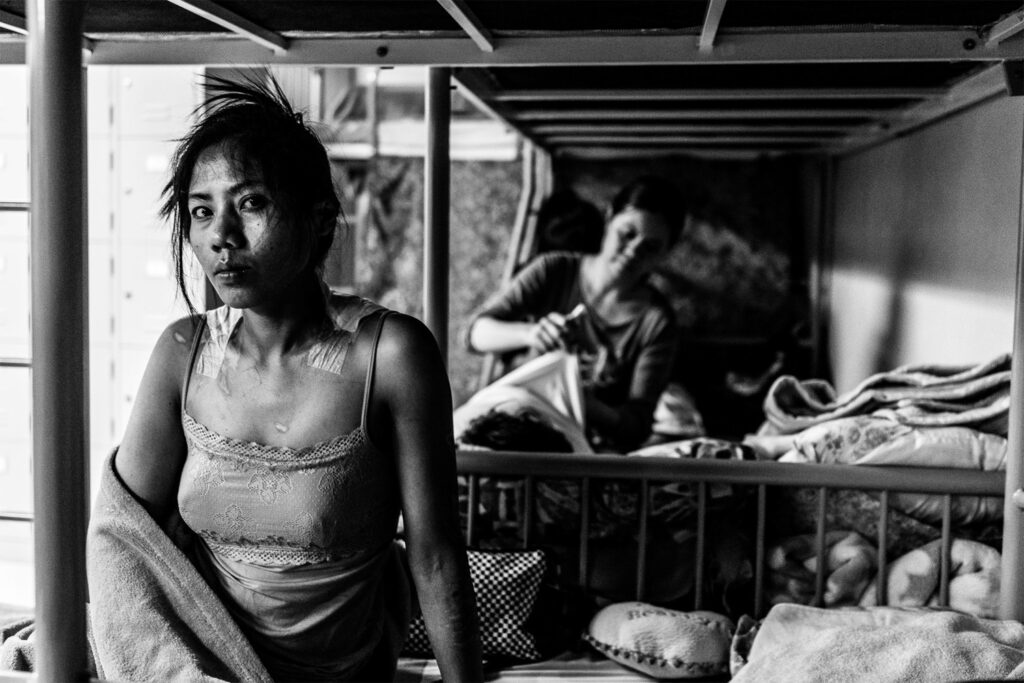
It was during the early period of the pandemic in 2020 when four young Filipina women who were au pairs before found themselves seeking shelter in a warehouse in Amsterdam not because they wanted to isolate as admonished by the Covid restrictions but because they had no place to go. Goods are supposed to be stored in warehouses. But women?
They lost their jobs as house cleaners because of the pandemic and had no money to pay the rent. Being undocumented domestic workers, they receive wages on the basis of no work no pay. During the lockdown they have to stay home just like the rest of the population. Staying home meant for them no work and therefore they did not earn a single cent.Yet, payment for food, utilities, room or house rent still have to be paid. They were burdened with great financial difficulties.
This incident was the immediate trigger for us, the initiative group of Stg. Tahanan Migrante to come together to address the need for a shelter for Filipino migrants in distress. Although the felt need for a shelter was appreciated and understood by many migrant activists from the Filipino community much earlier before the pandemic. Many discussions on the need for a shelter have been held amongst members of the Filipino community coming from different backgrounds, migrant activists, feminists, church people, refugees, undocumented domestic workers and au pairs. The initiative group crystallized this idea towards the formation of Stg. Tahanan Migrante. Some members of the initiative group now comprise the members of the board of the foundation.
The story of a young Filipina whose life was in danger because of domestic violence who was refused shelter and assistance by a reception center for battered women because she was undocumented is a memory that continues to rankle our hearts.
We therefore thought of Stg. Tahanan Migrante as our response to Filipino migrants in distress. We believe in the idea of “migrant-to-migrant sheltering”, that migrants offer shelter to other migrants.
Migrants specially the undocumented are the ones who fall between the cracks, so to speak, of the Dutch welfare state system. They do not enjoy a social a safety net unlike the rest of the population. They are sometimes pushed to the edge of the cliff in times of crisis.